
What Types Of Immersion Cooling Exist? A Comparison Of Single-Phase And Two-Phase Systems
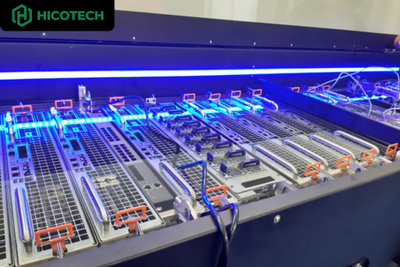
What Types of Immersion Cooling Exist?
1. Single-Phase Immersion Cooling
Single-phase immersion cooling is a method in which the coolant remains in a liquid state throughout the entire cooling process. Unlike other cooling technologies, the fluid used in this system does not undergo a phase change such as boiling or evaporation. Instead, it continuously circulates in liquid form while absorbing heat generated by electronic components such as servers, processors, and other high-power hardware.
In a typical single-phase system, the electronic equipment is fully submerged in a specially engineered dielectric fluid. As the components operate, the coolant absorbs the heat produced by the hardware. The warmed fluid is then pumped through a heat exchanger, where the heat is transferred to a secondary cooling loop, usually a water-based circuit. After releasing the heat, the cooled liquid is circulated back the immersion tank to repeat the cycle.
Because the coolant remains stable in its liquid state, single-phase immersion cooling systems are generally simpler to design, easier to maintain, and highly reliable. This technology is widely used in modern data centers due to its ability to improve energy efficiency, reduce the need for traditional air cooling, and provide consistent thermal management for high-density computing environments.
2. Two-Phase Immersion Cooling
Two-phase immersion cooling operates on a more advanced principle in which the cooling fluid changes phase between liquid and vapor during the heat transfer process. In this system, electronic components are submerged in a specialized dielectric fluid with a relatively low boiling point.
When the hardware generates heat, the surrounding liquid absorbs this thermal energy and begins to boil at the surface of the hot components. During this process, the fluid transitions liquid to vapor, utilizing a phenomenon known as latent heat—the large amount of energy required to change the phase of a substance without increasing its temperature. This phase-change mechanism allows the system to remove heat extremely efficiently.
The vapor produced by boiling rises naturally to the top of the sealed immersion tank, where it comes contact with a condenser or cooling coil. As the vapor releases heat to the condenser, it cools and transforms back liquid form. The condensed liquid then falls back the fluid bath, often described as a “rain effect,” and the cycle repeats continuously.
Two-phase immersion cooling is known for its exceptional heat transfer capability and high cooling efficiency, making it particularly suitable for high-performance computing (HPC), artificial intelligence workloads, and advanced data center infrastructures where thermal loads are extremely demanding.
Read more: What Is Liquid Immersion Cooling? Why Choose Immersion Cooling
| Single-Phase Immersion Cooling | Two-Phase Immersion Cooling |
|  |

Galden® Commercial Product Range
| Product | Image | Boiling Point | Single Phase | Two Phase |
| Galden® HT55 | 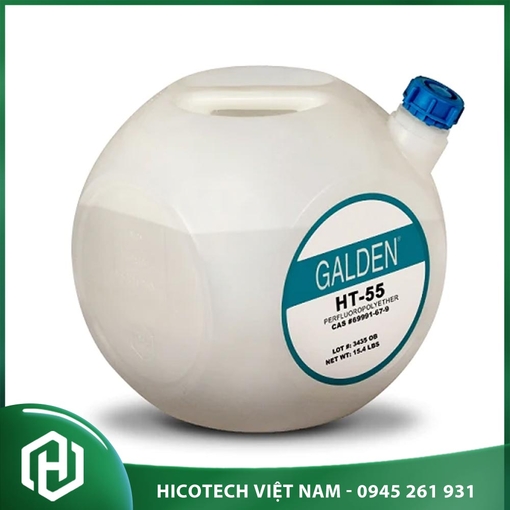 | 55°C | ✔ | |
| Galden® HT70 | 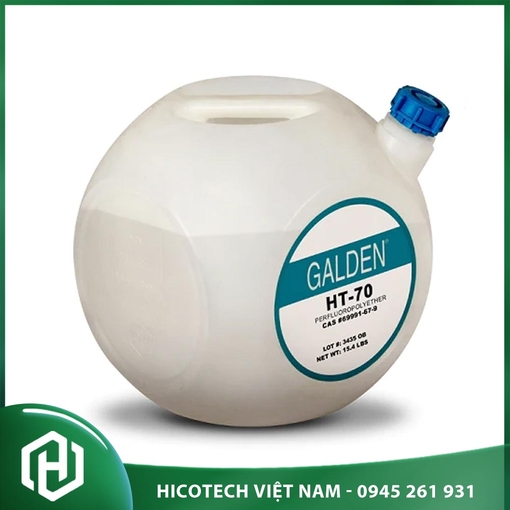 | 70°C | ✔ | |
| Galden® HT80 |  | 80°C | ✔ | |
| Galden® HT110 |  | 110°C | ✔ | |
| Galden® HT135 |  | 135°C | ✔ | |
| Galden® HT170 | 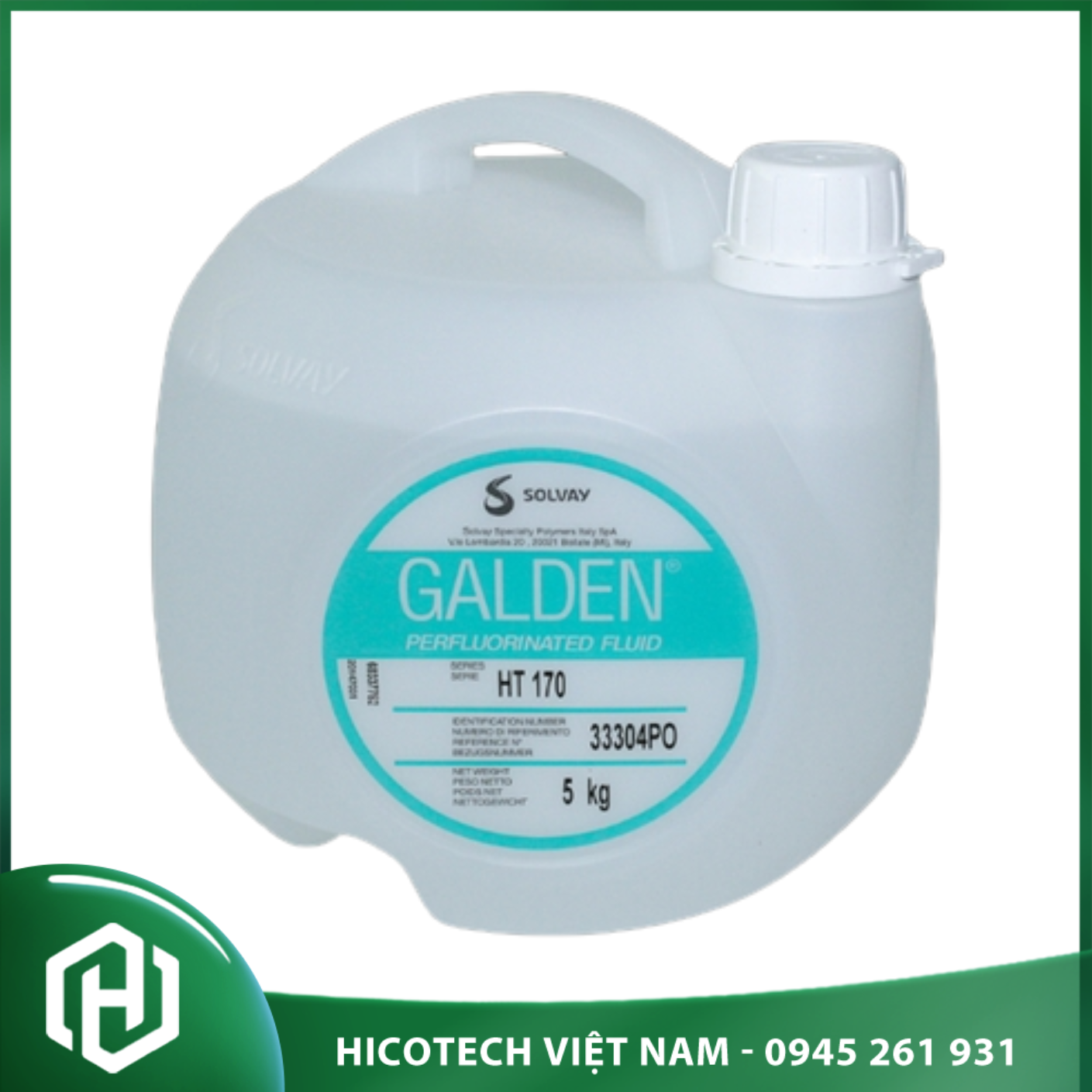 | 170°C | ✔ | |
| Galden® HT200 |  | 200°C | ✔ | |
| Galden® HT230 |  | 230°C | ✔ |
Comparing Single-Phase And Two-Phase Immersion Cooling
| Cooling Type | Advantages | Disadvantages |
| Single-Phase Immersion Cooling |
- Coolant remains in liquid form, making the system design simpler. - Easier to operate and maintain compared to phase-change systems. - High reliability due to fewer complex components. - Lower risk of fluid loss because the coolant does not boil.
| - Heat transfer efficiency is lower than two-phase systems. - Requires pumps and circulation systems to move the coolant to the heat exchanger. - May require larger volumes of fluid and infrastructure for high-density workloads. |
| Two-Phase Immersion Cooling | - Extremely efficient heat transfer due to phase change and latent heat. - Can handle very high thermal loads from high-performance computing systems. - Often requires less fluid movement since vapor naturally rises and condenses. | - System design is more complex due to boiling and condensation processes. - Higher implementation and maintenance costs. - Specialized fluids with specific boiling points are required. |
Contact Information
Hotline / WhatsApp: +84 945 261 931
Email: Sales@hicotech.com.vn
Có 0 bình luận, đánh giá về What Types Of Immersion Cooling Exist? A Comparison Of Single-Phase And Two-Phase Systems
TVQuản trị viênQuản trị viên
Xin chào quý khách. Quý khách hãy để lại bình luận, chúng tôi sẽ phản hồi sớm